
A Power Weeder is an essential agricultural implement designed to simplify the labor-intensive task of weeding. As mechanization advances, farms of all sizes—small holdings to large estates—are turning to different types of power weeders to boost efficiency, reduce labor costs, and secure optimum crop growth. In this article, we’ll dive deep into the four main types of power weeders: manual, petrol, diesel, and electric—highlighting features, benefits, limitations, and use cases.
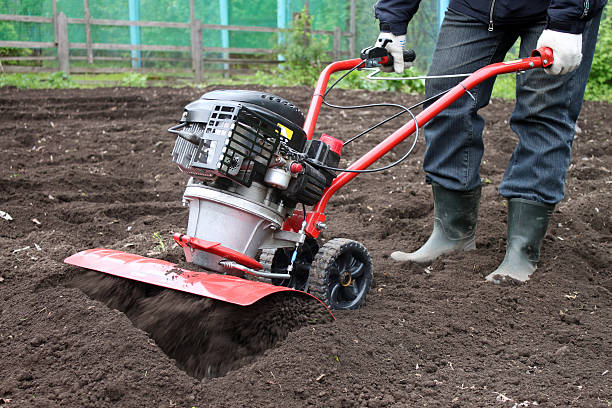
1. Manual Power Weeders:
The Humble Yet Effective Starter
What Are Manual Power Weeders?
Manual power weeders—also referred to as hand-operated or pedal-driven weeders—are simple machines that rely entirely on human effort. They typically consist of a rotating blade or tines attached to a wheel or pedal system, allowing operators to remove weeds with minimal effort.
Advantages
- Low Cost & Maintenance: No engine or parts requiring fuel or electrical systems.
- Eco-Friendly: Zero emissions—ideal for organic farms.
- Lightweight & Portable: Easy to handle in small or terraced fields.
Disadvantages
- High Labor Requirement: Relies fully on physical effort and stamina.
- Limited Depth Control: Harder to regulate tilling depth consistently.
- Not Suitable for Large Farms: Best for small plots and kitchen gardens.
Ideal For
- Small-scale farms, terraces, or nurseries.
- Organic and eco-friendly farming setups.
- Regions with limited access to fuel or electricity.
2. Petrol Power Weeders:
Versatile & Powerful
What Are Petrol Power Weeders?
Also called gasoline power weeders, these machines use a small petrol engine (usually 2‑stroke or 4‑stroke) to power rotating blades or harrows. They deliver moderate to high torque and are widely used across varied farm sizes.
Advantages
- High Efficiency: Quicker weeding than manual methods.
- Portable Field Use: Can operate independently of electricity.
- Variable Speed Options: Many models offer adjustable throttle and blade speed.
Disadvantages
- Fuel & Emissions: Relies on petrol, which can be costly and contributes to CO₂ emissions.
- More Maintenance: Requires regular engine checks, spark plug servicing, and oil changes.
- Noise Level: Slightly noisy compared to manual or electric options.
Ideal For
- Farms spanning a few acres or more.
- Areas lacking reliable electricity access.
- Operations needing moderate to high horsepower output.
3. Diesel Power Weeders:
For Heavy‑Duty Farm Work
What Are Diesel Power Weeders?
These robust machines run on diesel engines and are designed for heavy-duty tasks. Common in large-scale farms, they efficiently handle challenging soil conditions and dense weed growth.
Advantages
- High Torque & Durability: Great for compacted or clay-heavy soils.
- Fuel Economy: More miles per liter compared to petrol, reducing operating costs.
- Longer Lifespan: Diesel engines endure heavy use better.
Disadvantages
- Higher Upfront Cost: More expensive than petrol or manual counterparts.
- Emissions & Pollution: Generates more pollutants—subject to regulatory controls.
- Weight & Size: Less maneuverable in tight fields; bulkier build.
Ideal For
- Large farms, plantations, and estate-level agriculture.
- Heavy, infrequent tillage or deep-weeding tasks.
- Farmers seeking reduced fuel costs over time.
4. Electric Power Weeders:
Quiet, Clean & Cutting-Edge
What Are Electric Power Weeders?
Equipped with an electric motor—either mains-powered or battery-operated—these weeders are gaining traction in precision agriculture and small‑to‑medium farms.
Advantages
- Zero Emissions: Perfect for green farming mandates.
- Quiet Operation: Great for community zones and residential farming.
- Minimal Maintenance: No spark plugs, oil changes, or exhaust systems.
- Instant Start & Speed Control: Just flip the switch, and you’re ready to go.
Disadvantages
- Limited Power/Range: Battery models may run out during extended use; corded versions need power outlets.
- Charging Time: Battery recharge may disrupt work continuity.
- Investment: High-capacity batteries or advanced motors cost more upfront.
Ideal For
- Greenhouses, urban farms, and nurseries.
- Eco-sensitive zones with emission restrictions.
- Farmers seeking clean, low-maintenance solutions.
Comparing the Four Types: A Detailed Table 🧠
| Feature | Manual | Petrol | Diesel | Electric |
| Power Source | Human | Petrol engine | Diesel engine | Electric motor (battery or corded) |
| Fuel Cost | None | Medium-high | Medium | Low (electricity/battery) |
| Emissions | Zero | Moderate CO₂ & pollutants | High CO₂ & particulates | Zero (battery/mains) |
| Noise Level | Very low | Moderately loud | Loud | Very low |
| Maintenance Needs | Minimal | Engine upkeep required | Heavy engine servicing | Simple motor check-ups |
| Mobility | High | High | Medium (bulkier) | High (cord/battery constraints) |
| Field Size Suitability | Small | Small to medium | Medium to large | Small to medium |
| Average Cost | Low | Moderate | High | Moderate to high |
Choosing the Right Power Weeder for Your Needs
When selecting a Power Weeder, consider the following:
- Farm Size & Terrain
- Small plots: Manual or Electric models.
- Large, open fields: Petrol or Diesel are more suitable.
- Small plots: Manual or Electric models.
- Environmental Priorities
- Seeking clean, low-impact farming? Choose Electric or Manual.
- Marginal pollution concerns: Petrol may be acceptable.
- Cost-efficiency in fuel usage: Diesel engines win in high-output, long-duration use.
- Seeking clean, low-impact farming? Choose Electric or Manual.
- Operational Efficiency
- Labour scarcity: Mechanized (all but manual).
- Time-sensitive jobs: Electric and Petrol models start instantly; Diesel needs warm-up.
- Labour scarcity: Mechanized (all but manual).
- Cost & Maintenance
- Budget-conscious growers: Manual is least expensive upfront.
- Long-term use and productivity: Petrol/Diesel make more sense.
- Lower maintenance and cleaner operation: Electric is ideal despite higher initial cost.
- Budget-conscious growers: Manual is least expensive upfront.
- Availability of Fuel or Power
- Remote farms with no grid power: Petrol and Diesel.
- Grid-connected or urban farms: Electric is highly convenient.
- Remote farms with no grid power: Petrol and Diesel.
Use‑Case Scenarios for Each Power Weeder Type
- Manual: Great for community gardens, school farms, terrace planting. Provides subtractive tilling in confined spaces, with minimal investment and zero fuel need.
- Petrol: Farmers with 2–5 acre fields, who need efficiency and flexibility without electricity dependency—especially in hilly terrains or pre-monsoon soil preparations.
- Diesel: Estate-level farms, plantations, or tractor-towed grill harrows benefit from diesel power weeders. Best for heavy soil break-up in deep-weeding routines.
- Electric: Ideal for nurseries, organic greenhouses, or urban farms; especially where silent operation is valued—like rooftop gardens or R&D plots.
Maintenance Tips for Long‑Term Performance
Here are general maintenance tips for all types of Power Weeders:
- After Every Use
• Clean blades and tines of mud and debris
• Check bolts and nuts; tighten if loose - Weekly or Monthly Checks
• Manual: Inspect for rust; re-grease moving parts
• Petrol/Diesel: Clean air filters, change spark plug/oil as needed, check fuel hoses
• Electric: Inspect cables, battery connection; lubricate rotating parts - Storage
• Drain fuel or battery, clean thoroughly, store in a dry and safe place—preferably sheltered from extreme weather
Aspee’s Range of Power Weeder Solutions
At Aspee, we take pride in supplying premium Power Weeders tailored to the unique needs of farmers across India. Our product line includes:
- ⚙️ Manual Power Weeder (Model AMW‑101): Rust-resilient blades, lightweight aluminum handles, price ₹4,500
- 🔥 Petrol Weeder (Model APW‑201): 4‑stroke engine, adjustable throttle, ₹45,000
- 💪 Diesel Weeder (Model ADW‑301): 5.5 HP engine, heavy-duty tillers, ₹62,000
- ⚡ Electric/Battery Weeder (Model AEW‑401): 24 V Li-ion with 4‑hr runtime, ₹50,000
Each model is rigorously tested under Indian field conditions to ensure durability, performance, and farmer satisfaction. Read more and order online at.
Get in Touch with Aspee
Looking to buy a Power Weeder or need expert advice? Reach out to us:
📞 Phone: +91-9833879797
🌐 Website:https://aspee.com/
📧 Email: aspee@aspee.com